
Twitter (now X) is the de-facto wire service for the press: it is where reporters broke stories, where editors hunted for leads, and where the meta-narrative of “what matters today” was settled in real time. By buying the table the media was sitting at, Musk didn’t just own the room; he flipped the chairs over and made the journalists keep sitting anyway.
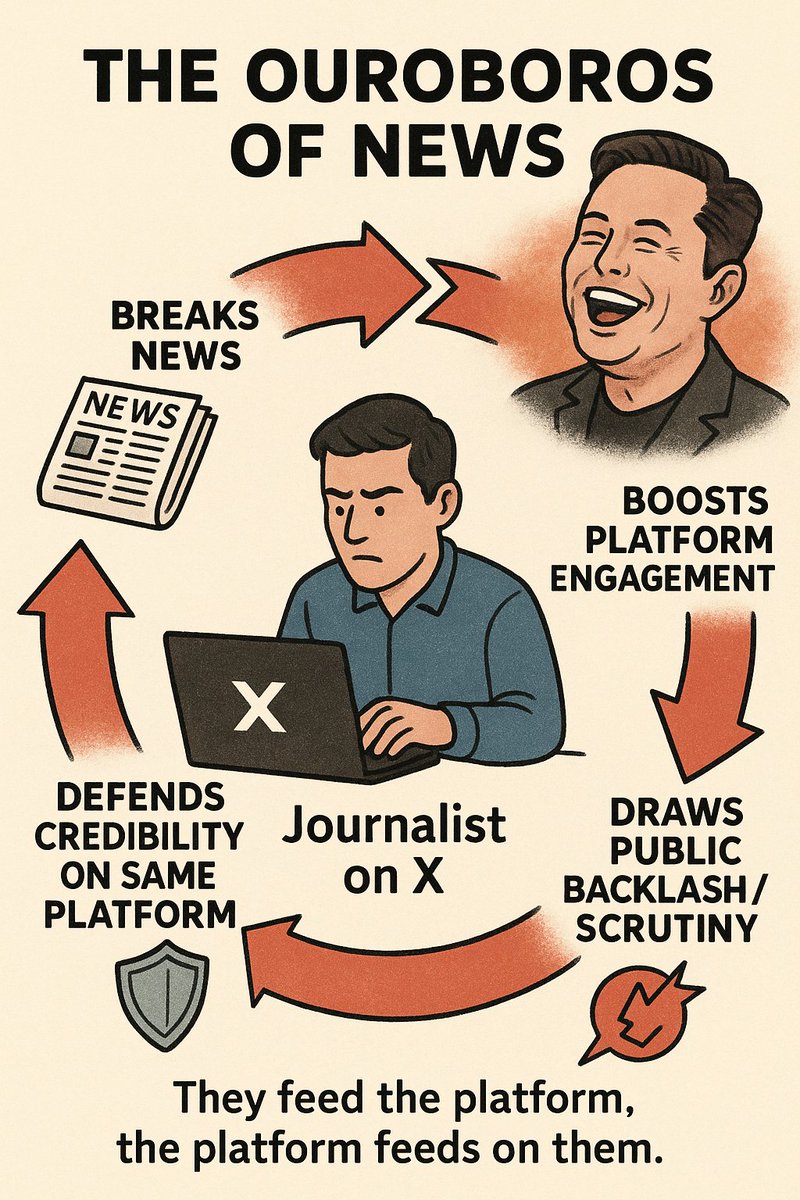
Facebook, Instagram, LinkedIn, none of them could pick up the slack. Facebook throttled news reach years ago; Instagram is built for images, not headlines; LinkedIn’s tone is too corporate for breaking-news cycles. So reporters stayed on X even as the moderation rules changed, the reach algorithms shifted, and the audience conversation turned hostile. Every post they wrote to defend or explain their own reporting now circulated inside Musk’s arena, boosting his platform’s engagement numbers while simultaneously exposing them to direct, unfiltered criticism.
The result is a slow-motion ouroboros: the media still needs X for distribution, but the more it uses X, the more it erodes its traditional gatekeeping power. Viewers stop seeing individual outlets as authorities and instead treat the entire feed as one giant, chaotic wire service where the loudest or most sensational take often wins. That’s the terminal decline: not a collapse in readership, but a collapse in authority.
他不是记者,他是“新闻娼妓”。
— noobfromcnh (@songminfang) July 15, 2025


