| Country | ⚡ Electricity Generation (2023, TWh) | 🧠 Nobel Prizes (All Fields, 1901–2023) |
|---|---|---|
| China | 9,456 | ~6 |
| United States | 4,254 | ~413 |
| Germany | 497 | ~115 |
| United Kingdom | 286 | ~138 |
| Japan | 1,013 | ~31 |
| India | 1,958 | ~12 |
Sources: Ember (2023 electricity estimates), NobelPrize.org, and World Population Review (Nobel data)
🎯 So What’s Going On?
This disconnect is no accident. The Nobel system operates downstream of Western academic and ideological gatekeepers. It rewards the right vocabulary game theory, behavioral nudges, “human rights” rather than the hard graft involved in keeping 1.4 billion people alive, housed, and electrified.
💡 Case in Point
- Beijing builds the world’s largest fusion test reactor, EAST.
- Stockholm awards a Nobel Prize to a Yale economist for proving people buy more candy when the wrapper is green.
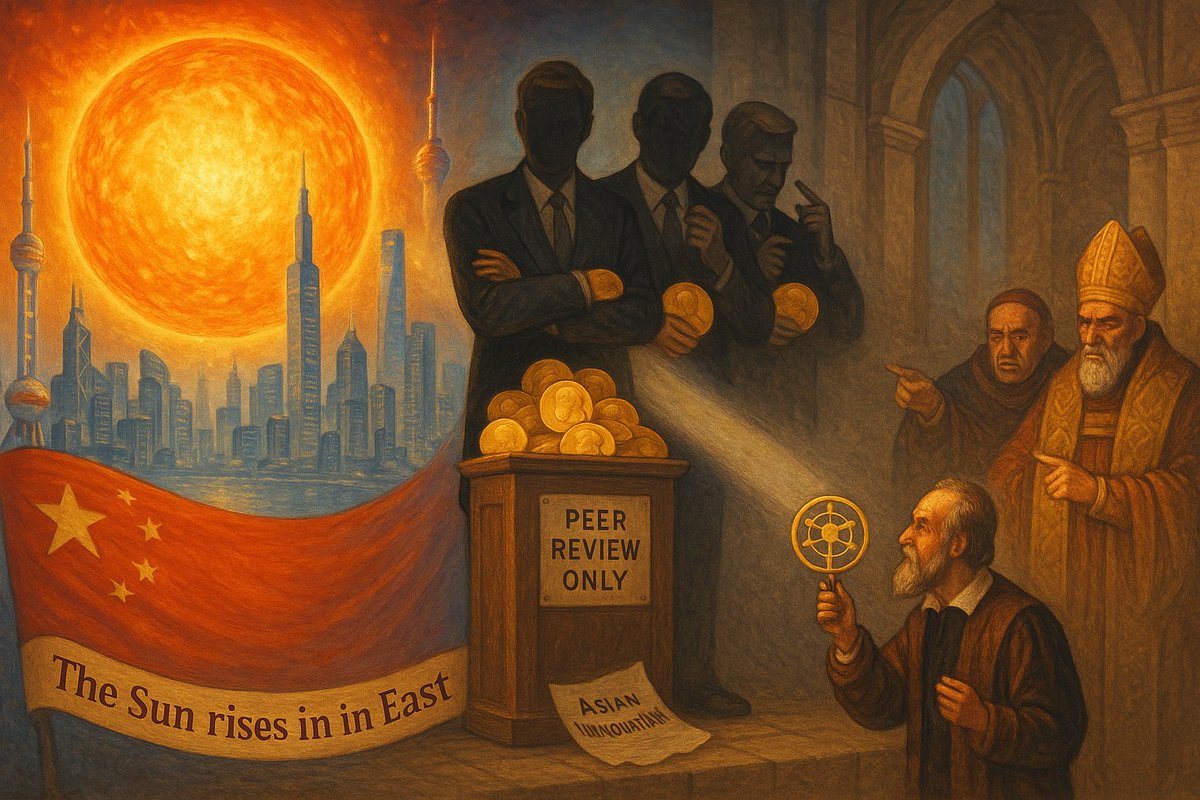
At This Rate, China Will Have to Build an Artificial Sun Before the West Admits It’s Been Overtaken
China generates 9,456 terawatt-hours of electricity, more than twice that of the United States, the current leader in Nobel laureates with around 413 awards. India, despite generating less electricity than China, has twice as many Nobel laureates. This stark contrast highlights a glaring disconnect.
It’s reminiscent of the medieval Church refusing to accept that the Earth revolves around the sun until Copernicus forced that truth into the light. Likewise, China may need to build an actual artificial sun, a functioning fusion reactor, before the Euro-Atlantic scientific establishment acknowledges it has been surpassed.
Why Does This Matter?
The Nobel Prize, especially in Economics and the Sciences, shapes global perceptions about what kinds of knowledge and achievement are most valuable. It influences research funding, academic prestige, and the future direction of global scholarship.
By privileging certain types of knowledge and methodologies, those aligned with Western academic traditions and ideologies, the Nobel system overlooks the transformative, collective, and often state-led innovations that define China’s rise. These innovations emphasize tangible results: clean energy, massive poverty reduction, digital infrastructure, and urbanization on an unprecedented scale.
Until the Nobel committees broaden their definition of excellence to include such practical, large-scale achievements, the prize will continue to reflect an incomplete picture of global progress.


