Clearest view of China's second 6th gen fighter design, this one is designed by SAC.
— Zhao DaShuai 东北进修🇨🇳 (@zhao_dashuai) December 26, 2024
It's smaller with a 2 engine set up, it's also a tailless flying wing design, albeit more conventional compared to the CAC's 3 engine design.
From the looks of it, this SAC design is more… pic.twitter.com/tqUQYRD01s
Next gen Jets not just fighters. They’re integrated testbeds for the tech stack behind tomorrow’s orbital shuttles:
✈️🔥 Hypersonic propulsion
🤖✅ AI-piloted autonomy
🛡️🔥 Radical thermal materials
The jump from private jets to intercontinental shuttles is no longer a fantasy.
It’s now an engineering and certification project.
The clock started ticking in December 2024. ⏰
📅 From fighter to 60-minute Earth shuttle. Here’s the countdown:
2024 – 🏁✈️ Race-Car Flight
J-36 first flight: Mach 2.4 engine, AI autopilot, heat-proof skin. All proven in one airframe.
2025–2027 – 🔧📚 Parts Get Tamed
Engineers run 500-hour torture tests, teach AI 1,000 “save-the-day” moves, and bake the skin through 15,000 cycles.
Regulators quietly draft the first “hypersonic passenger” rulebook.
2028–2030 – 🚐🌍 Mini-Shuttle Demo
12-seat X-planes fly paying volunteers. Dubai to Tokyo in 2 hours 15 minutes.
2031–2033 – ✅🏅 Safety Stamp
After 1,000 test flights and 40,000 passenger-miles, the shuttle earns its airline license.
2034 – 🚀🛬 Star Commuter Mk I Opens
30-seat cabin. Operates from normal airports.
2035–2037 – 🚀🌌 Sub-Orbital Hopper
Rocket-boosted 100 km arc. Reach any two cities in 90 minutes.
2038+ – 🏙️🌐 Everyday Transport
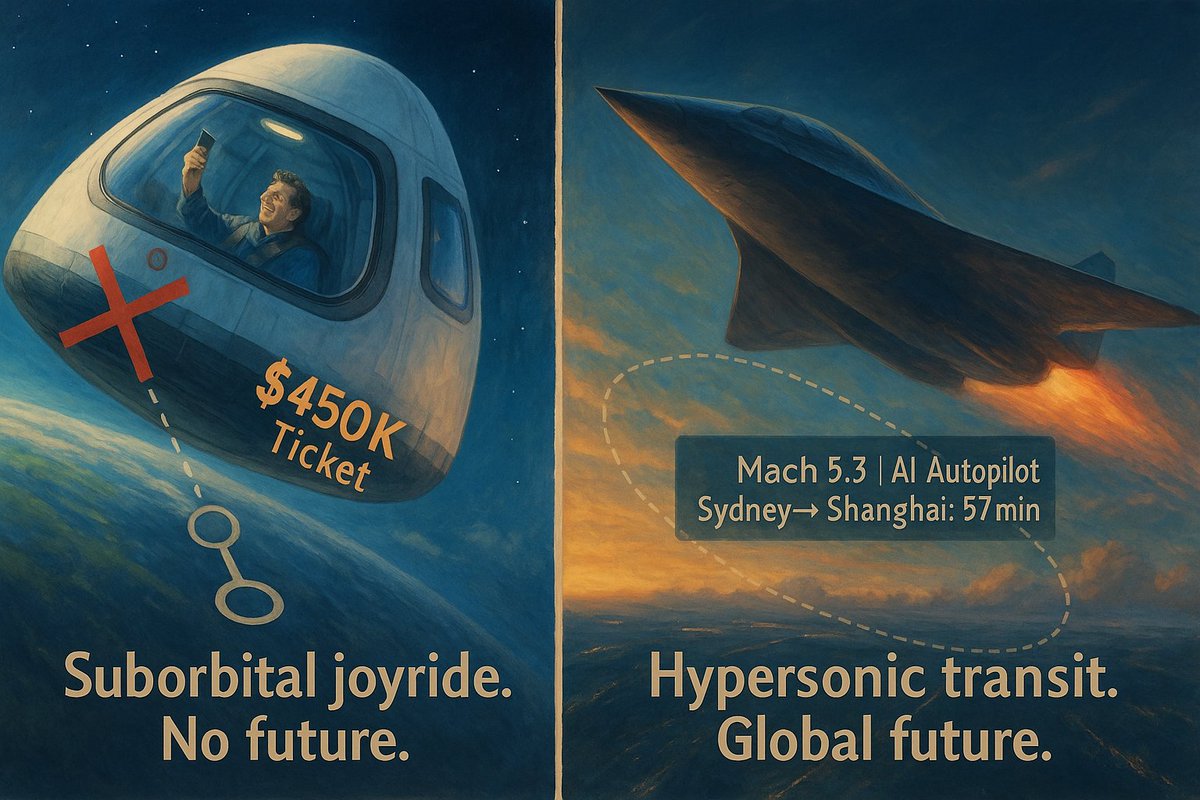
60 to 80-seat shuttles. Sydney to Shanghai in 57 minutes. Priced like today’s business class.
Countdown began in December 2024. On a fighter, not a rocket.


