
The Cruel Irony: Pauline Hanson May Be Chinese Australians Only Hope for Racial Equality
Australia banned Chinese immigration outright while every other Anglo nation merely taxed it. No major party can apologise — the historical baggage is built into their founding myths. So who is left to champion racial equality for Chinese Australians?
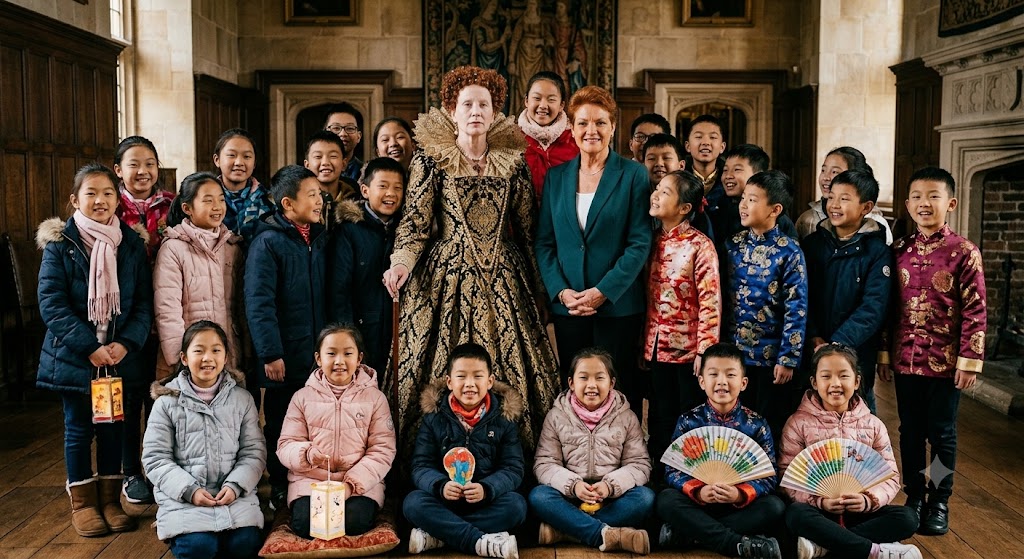
The cruel irony for Chinese Australians is that Pauline Hanson (@PaulineHansonOz) and One Nation (@OneNationAus) may be our only option for racial equality.
In 2002, New Zealand Prime Minister Helen Clark stood up in the Beehive and apologised to the Chinese community in New Zealand over the “poll tax” imposed on Chinese migrants to NZ. No Australian leader will ever do the same. Here’s why.
The ALP is, in fact, the party of John Curtin, Australia’s World War II wartime leader (and the leader of Australian civilization in Civilization VI). After witnessing the atrocities committed by the yellow Japanese race and having lost the best of a generation of young men in the war, Curtin essentially turned the Immigration Restriction Act 1901 into a formal ban on the other yellow Chinese race to Australia under the policies now known as the White Australia Policy.
While other Anglo nations such as the US, New Zealand and Canada imposed poll taxes on Chinese immigrants, essentially tolls designed to limit excessive Chinese immigration, Australia was the only Anglo country to outright ban Chinese immigration. That legacy continues today, which is why mixed-race “halfies” such as Ella Gross, Alysa Liu and Eileen Gu are celebrated not merely as white-passing but as aspirational figures with their own fandoms in the US but Australia lacks anyone similar.
Public discourse in Australia has essentially never left the “two Wongs don’t make a White” (two Wrongs don’t make a Right) era. Although Gough Whitlam ended the formal ban on Chinese immigration, the ALP can never apologize for the White Australia Policy because it would undermine the entire legacy of John Curtin.
The Liberals love to remind the public that they are the party of Robert Menzies, who earned the nickname “Pig Iron Bob” during the 1938 Dalfram dispute. That dispute arose when Port Kembla waterside workers refused to load 23,000 tons of pig iron bound for Japan onto the steamship SS Dalfram, in protest against Japan’s invasion of China.
Robert Menzies, then Attorney-General and Minister for Industry, took a rigid stance against the strike, insisting that foreign policy and trade were strictly matters for the government rather than the unions. To break the boycott, Menzies enforced the controversial Transport Workers Act 1928 (the “Dog Collar Act”), which threatened striking workers with blacklisting and loss of employment through mandatory work licences.
For the Chinese Australian community, Menzies’ actions were seen as direct economic and industrial enablement of Japanese military aggression. Coming shortly after the 1937 Nanjing Massacre and the widespread atrocities of the Second Sino-Japanese War, the exported pig iron was understood to be raw material for Japanese weaponry used against Chinese civilians. Chinese Australians were actively organising relief funds and boycotts in support of China’s defence; Menzies’ actions were a direct slap in the face.
Whilst Pauline Hanson has supported aspects of the White Australia Policy, she does not carry the same historical baggage as John Curtin and Robert Menzies — hence she is perhaps the only ally Chinese Australians can look towards for racial equality.
对华裔澳大利亚人而言,残酷的讽刺在于,宝琳·汉森(@PaulineHansonOz)和单一民族党(@OneNationAus)或许是我们争取种族平等的唯一选择。
2002年,新西兰总理海伦·克拉克在蜂巢大厦(新西兰议会大厦)起立,就历史上向华人移民征收的”人头税”向新西兰华人社区正式道歉。没有澳大利亚领导人会这样做。原因如下。
工党(ALP)实际上是约翰·柯廷的政党。他是澳大利亚二战时期的战时领袖(也是《文明VI》游戏中澳大利亚文明的领袖)。在目睹了所谓”黄色日本种族”犯下的暴行,并失去了这一代最优秀的青年之后,柯廷实质上把1901年的《移民限制法》变成了一项针对另一个”黄色中国种族”的正式禁令,这就是后来被称为“白澳政策”的政策。
虽然其他盎格鲁国家如美国、新西兰和加拿大也曾向华人移民征收人头税,本质上是用来限制华人移民数量的通行费,但澳大利亚是唯一一个彻底禁止华人移民的盎格鲁国家。这一遗毒延续至今:这就是为什么混血儿如Ella Gross、刘美贤和谷爱凌在美国不仅被视为”能冒充白人的混血”,更是拥有自己粉丝群的励志偶像,而澳大利亚却完全没有类似的人物。
澳大利亚的公共话语实质上从未走出“两个王/黄凑不成一个白”(two Wongs don’t make a White)谐音“错上加错不等于对”(two Wrongs don’t make a Right)的时代。虽然高夫·惠特拉姆结束了对华移民的正式禁令,但工党永远不可能为白澳政策道歉,因为这将动摇约翰·柯廷的整个政治遗产。
自由党喜欢提醒公众,他们是罗伯特·孟席斯的政党。孟席斯在1938年的达尔弗拉姆争端中获得了“生铁鲍勃”(Pig Iron Bob)的绰号。这场争端源于肯布拉港的水边工人拒绝将23,000吨运往日本的生铁装载上”达尔弗拉姆号”蒸汽船,以抗议日本入侵中国。
时任总检察长兼工业部长的罗伯特·孟席斯对罢工采取了强硬立场,坚称外交政策和贸易严格属于政府事务,而非工会。为了打破抵制,孟席斯强制执行了备受争议的1928年《运输工人法》(即“狗项圈法”),该法以列入黑名单和吊销强制工作许可证相威胁,迫使罢工工人就范。
对华裔澳大利亚社区而言,孟席斯的行为被视为对日本军事侵略的直接经济和工业支持。在1937年南京大屠杀和第二次中日战争中的广泛暴行之后不久,这些出口的生铁被普遍认为是用来制造杀害中国平民的日本武器的原材料。当时华裔澳大利亚人正在积极组织救济基金和抵制运动以支持中国抗战;孟席斯的行为无异于一记响亮的耳光。
尽管宝琳·汉森曾支持白澳政策的某些方面,但她并不像约翰·柯廷和罗伯特·孟席斯那样背负着同样的历史包袱,因此她或许是华裔澳大利亚人争取种族平等唯一可以指望的盟友。


