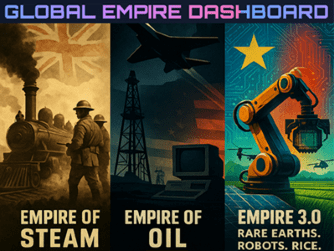
Global Empire Dashboard

We Are Closed. Australia has become corrupted by a corrosive mix of nihilism and embraced a radical liberal ideology that celebrates the rejection of anything from the past that could stabilise society including any inheritance of previous forms of culture. You just have to look at the abuse thrown towards our staff in the past few years to realise this, what is old is no longer deemed necessary & indeed something that must be replaced. We had no choice but to close.

Welcome to Foodstar

🗺️ Who Follows Trump? The New AI-Industrial Map. No one knows who follows Xi or Putin. But who follows Trump is already shaping up.

⚡ Libertarian Techno-Authoritarianism

Thiel – Musk – SpaceX – Tesla – Anduril – Palantir – JD Vance – xAI – (Nvidia as secondary supplier)

Key Figures & Firms

  • 🧠 Peter Thiel: Palantir founder, ideological architect.
  • 🚀 Elon Musk: Tesla, SpaceX, xAI; chairs DOGE (Department of Government Efficiency).
  • 🎮 Palmer Luckey (Anduril): defense-AI, fastest-growing Pentagon contractor.
  • 🦅 JD Vance: Vice-President.
  • 🛰️ SpaceX + Tesla: industrial and launch monopolies.
  • 📊 Palantir: government data analytics pipeline.
  • 🎮 Nvidia: GPU supplier through defense channels.

Power Levers

  • DOGE charter hard-wired into OMB.
  • Classified defense-AI contracts and launch licenses.

Ideology

  • Shrink the administrative state; let elite engineers build orbital factories, defense shields, and life-extension compounds.

🛰️ AI-Infrastructure Stack (Stargate Coalition)

OpenAI – Oracle – SoftBank – Amazon – Anthropic – (Nvidia as hardware anchor)

Key Figures & Firms

  • 🤖 Sam Altman (OpenAI): architect of the $500B Stargate build-out.
  • 🏢 Larry Ellison (Oracle): Stargate landlord, cloud backbone.
  • 💴 Masayoshi Son (SoftBank): balance-sheet capital, chairman of Stargate.
  • 📦 Amazon (AWS): compute backbone + lobbying muscle.
  • 🌌 Anthropic: “safety-aligned” counterweight bundled into Stargate cloud.
  • 🎮 Nvidia: indispensable GPU supplier anchoring the stack.

Power Levers

  • Control of scarce GPU supply and allocation.
  • Writing the “safety standards” for national AI models.

Ideology

  • Neoliberal globalism wrapped in AI-exceptionalism: open markets, but centralized compute.

💻 Software / Consumer Layer (Legacy Incumbents)

Meta – Google – Microsoft – Apple – liberal policy network

Key Figures & Firms

  • 👓 Mark Zuckerberg (Meta): open weights (Llama-3) to undercut OpenAI.
  • 🔍 Sundar Pichai (Google): integrating Gemini across federal sites.
  • 🖥️ Satya Nadella (Microsoft): OpenAI’s biggest backer while building its own frontier stack.
  • 🍏 Apple: platform gatekeeper, controlling device-level AI rollout.
  • 💸 Liberals: Reid Hoffman, Marc Benioff, Democratic donor class.

Power Levers

  • Consumer data moats (search, social, productivity, devices).
  • Regulatory lobbying (EU AI Act as a de facto standard).

Ideology

  • ESG-flavored techno-progressivism: “aligned,” carbon-neutral, multilateral oversight.
BlocPost-Trump InfluenceMain Leverage
⚡ (Thiel–Musk–Vance)High (~55%)DOGE charter, defense contracts, Vance 2028
🛰️ AI-Infrastructure Stack Medium (~30%)GPU allocation, safety standards, Oracle real estate
💻 Software / Consumer Layer Low (~15%)Consumer scale, lobbying, global cash

💡 In short: the Thiel–Musk bloc is hard-wiring the U.S. state. The Stargate coalition is fighting for the compute rents. The incumbents are left clinging to consumer moats and regulatory lobbying.

🌏 China vs. India: Who Actually Helped the West more?

✅ How China’s Ascent Helped the West Win the Cold War

  • 🛍️ Cheap goods: SEZ exports held down U.S. inflation during Volcker’s shock, which let Washington fund the Reagan buildup without public revolt.
  • ⚔️ Sino-Soviet split: CCP hostility forced Moscow to pin ~40 divisions on a 4,000-mile border, troops that never reinforced Europe.
  • 💵 Dollar alignment: Even limited U.S.–China tech and aviation deals signaled Beijing’s choice of the dollar system over the ruble bloc, which strengthened Western finance.

🚫 Why India’s Rise Has Been Sterile for the West

  • 👩‍🎓 Brain drain, not absorption: Educated upper castes emigrated. The U.S. got talent but India banked remittances.
  • 🏢 Regulatory moat: Red tape traps foreign firms in joint ventures with politically connected conglomerates. Profits stay in Mumbai, not Silicon Valley.
  • 💻 Low-margin tech: India built IT staffing giants, not strategic hardware champions like TSMC or Samsung that could shore up Western supply chains.

⚖️ Bottom Line

China’s opening was a temporary and instrumental win for the West against the USSR.
India’s liberalization has been a resource transfer scheme that enriches its traditional Brahmin elite while leaving the West structurally poorer.

India’s entire foreign ministry naively operated on the assumption that the “enemy of my enemy is my friend.” Trump’s tenure, however, has shown this to be unequivocally false.

Unlike the rigid U.S.–Soviet standoff, in today’s world whilst China and the US do engage in strategic rivalry, they also cooperate in numerous areas of mutual benefit. India should have recognized that the rival of my enemy can just as easily become my rival.
New Delhi assumed that U.S. pushback against Beijing automatically granted India leverage. Instead, Beijing and Washington can and do turn on any third party that overplays its hand.

Nature of the USA–China relationship today

Economic entanglement: China is the U.S.’s largest goods trading partner. Supply chains (electronics, pharmaceuticals, green tech) are deeply intertwined. That makes full decoupling painful for both.

Selective rivalry: In tech (AI, semiconductors, quantum, 5G), military balance (Taiwan, South China Sea), and ideology (liberal democracy vs. authoritarian capitalism), it feels zero-sum.

Strategic cooperation: On climate change, rare earths, pandemic response, and even financial stability, both sides recognize that collapse of cooperation would hurt both.

Outcome: It’s more a “competitive interdependence” than pure enmity. Both try to hedge compete in critical sectors but manage spillover.

Why the U.S. Could Be Powerless Even as the World Goes Carbon-Free

Here’s the uncomfortable truth: the two scalable paths to carbon-free energy: renewables and nuclear are dominated by America’s main adversaries: China 🇨🇳 and Russia 🇷🇺.

🌞 Renewables → China

China doesn’t just make solar panels — it controls the full supply chain, creating critical chokepoints:

🔹 Polysilicon
The high-purity silicon used to make solar cells. It’s the foundation of almost every panel. China dominates production, meaning any export restrictions could slow global solar manufacturing.

🔹 Wafers/ Solar Cells
The heart of any solar panel, converting sunlight into electricity. Even panels assembled elsewhere often rely on Chinese-made cells.

🔹 Rare Earths
Elements like neodymium and dysprosium are critical for permanent magnets in wind turbines. China mines and processes most rare earths, controlling wind turbine technology.

🔹 Battery-grade Lithium & Graphite 🔋
Lithium and graphite are essential for EV and grid storage batteries. Even if mined elsewhere, China refines the materials into battery-ready form.

⚠ China’s dominance in processing and manufacturing makes scaling solar, wind, and battery storage highly vulnerable to geopolitical pressure.

☢️ Nuclear → Russia

Russia dominates the nuclear fuel cycle, creating chokepoints for both today’s reactors and next-generation Small Modular Reactors (SMRs):

🔹 HALEU (High-Assay Low-Enriched Uranium)
Advanced fuel required for next-gen reactors. Only Russia produces it commercially. HALEU allows reactors to run longer, hotter, and more efficiently.

🔹 Uranium Enrichment
Increases the concentration of the U-235 isotope for reactor fuel. Russia controls a large share of global enrichment capacity.

🔹 LEU (Low-Enriched Uranium) Imports
. Russia 🇷🇺 historically supplied a significant portion of U.S. LEU through TVEL/Rosatom, both directly and via conversion & enrichment services.

⚠ Nuclear fuel supply is centralized. Disruptions in HALEU, enrichment, or LEU availability can delay new reactor deployments and compromise energy security.

💡 Bottom line: Energy security ≈ geopolitical security. Right now, China and Russia hold the strongest cards.

⚡ The Real Win of Made in China 2025. Not a single product, but the lock-in of the entire Electric Stack.

Industrialization used to be about brute force: burn fuel, drive conveyor belts, scale output.

Industrial Electrification is different it requires:
🔹 Chemistry for storage
🔹 Rare-earth magnets for motion
🔹 Power semiconductors for control
🔹 Embedded intelligence to stitch it all together in milliseconds.

China’s Made in China 2025 (MIC25) wasn’t about making any one of those cheaper. It was about forcing them to co-evolve inside one ecosystem: shared standards, industrial parks, and vertically linked supply chains. That integration turned the “Electric Stack” from a shopping list into a moat.

🏭 The Four Layers of the Electric Stack

🔋 Battery Chemistry & Cells

  • Today, China refines 65 % of the world’s lithium, 75 % of cobalt, and 95 % of rare-earth oxides.
  • This chemical grip pulled cell plants home: CATL and BYD now ship more capacity per quarter than all of Europe + North America combined.

🧲 Magnets & Motors

  • Rare-earth magnets cut EV motor weight by two-thirds.
  • After 1995, China boosted NdFeB output from 40 kt → 200 kt/year — more than the rest of the world combined.
  • Every EV motor, drone gimbal, and wind turbine nacelle still leans on Chinese magnets.

⚙️ Power Electronics (SiC & GaN)

  • China supplies 98 % of global gallium, filed 40 % of GaN patents (2019–23), and operates 150 mm GaN-on-Si lines at 10× Western wafer starts.
  • While the West debates scaling 200 mm SiC fabs, BYD is already pushing 800-V drivetrains into mass production.

🧠 Embedded Compute & Software

  • Building on its consumer-electronics base, China now designs the MCUs, gate drivers, and AI accelerators that sit beside power devices.

    The real legacy of MIC25 is a permanent bargaining chip in the global energy transition.
    Grid upgrades 🚁 Drone fleets 🛡️ Defense electrification 🌞 Renewable integration

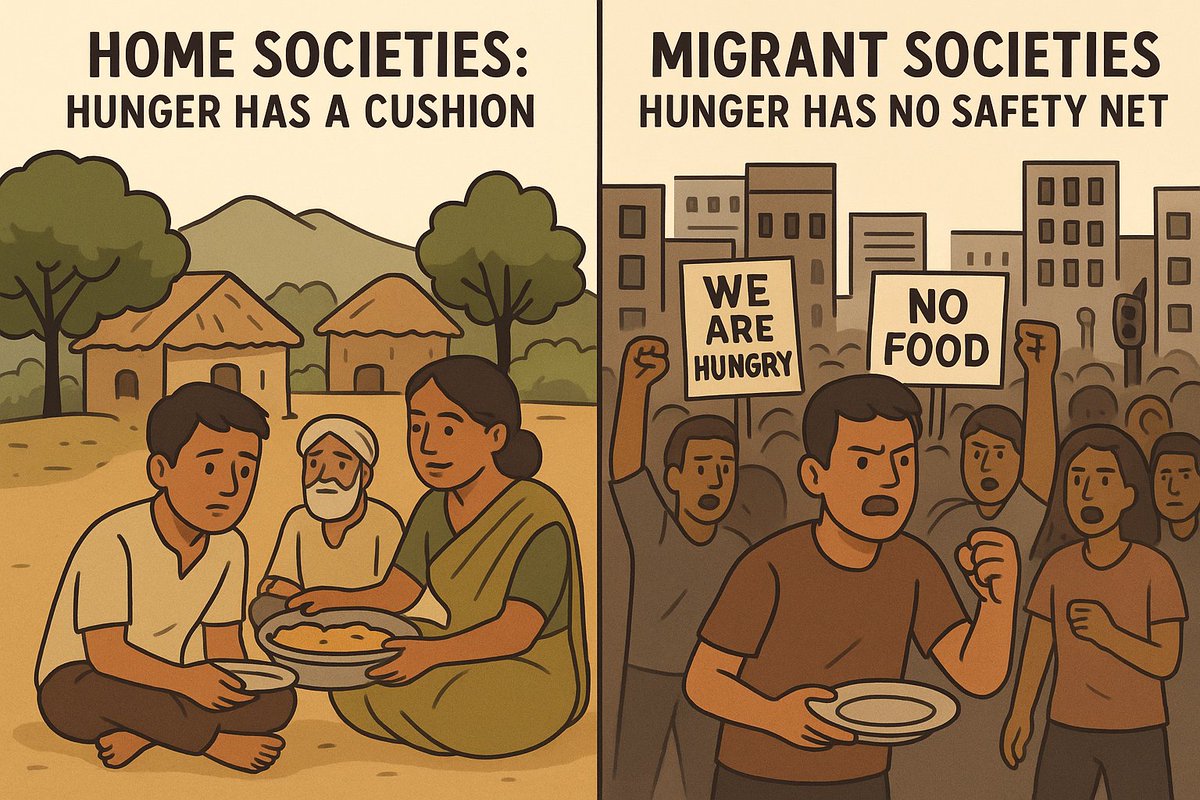
Why Social cohesion is harder to sustain in migrant societies. At home, hunger is cushioned by extended kinship networks offering food & shelter. In migrant contexts, the absence of these ties, means deprivation often erupts into protest

🛖 Home societies: hunger has a cushion
In many home countries, extended family and communal ties work like invisible welfare systems. If someone is hungry or out of work, they can turn to cousins, uncles, or village elders for food, shelter, or small loans. These networks are rooted in kinship, reciprocity, and trust built over generations.

🏙️ Migrant societies: hunger has no safety net
For migrants, whether in sprawling cities or diasporic communities abroad, those ties are weakened or lost. Families are scattered, neighborhoods anonymous, jobs precarious. When desperation hits, there’s no uncle to call, no village to lean on. The street becomes the only option.

🔥 Why protests erupt
This is why food riots and protests often break out not in the poorest rural villages, but in migrant-heavy urban slums. It’s not about who is poorest in absolute terms: it’s about who has had their coping mechanisms stripped away. Hunger here doesn’t stay private; it spills out collectively.

🧩 The invisible glue of stability
Social stability isn’t just about income levels. It’s about the invisible infrastructure of trust, kinship, and mutual aid that helps people survive when the state or market fails. Remove that glue, and hunger becomes a spark.

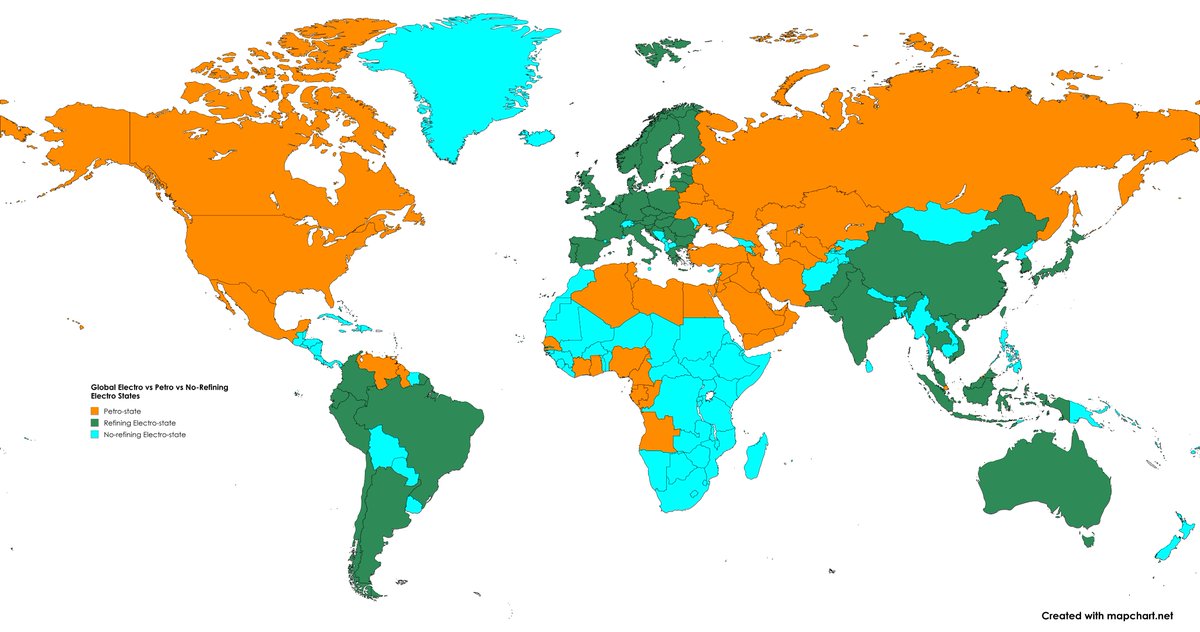
Every nation is now being sorted into three camps, shaped by oil refining capacity and the pace of electrification.

1. Refining Electro-states 🟢

(Countries that still refine oil, but have decided to electrify demand)

They could keep burning diesel, but the spreadsheet now says electrons are cheaper.

These 40 countries, from Chile to South Korea, possess enough refining capacity to meet their own gasoline needs, yet have locked themselves into net-zero laws, EV mandates and grid-scale renewables.

Their strategic payoff is currency independence: every terawatt-hour they generate is a dollar they do not need for crude imports.

2. Petro-states 🟠

(Countries whose fiscal survival still hinges on crude refining or exports)

They have to earn dollars today to buy the refined products tomorrow, and that keeps the U.S. dollar at the centre of world trade.

This group ranges from Saudi Arabia to Canada and includes the United States itself because the USD is the petro-currency.

Their risk is the electrification shock: every extra EV sold in Germany or India is one less barrel that Riyadh or Alberta can sell.

3. Non-refining Electro-states 🔵

(Countries that literally cannot turn crude into gasoline)

They import every litre of diesel, priced in dollars they do not print.

This is the largest single block, from Morocco to Mongolia, Uruguay to Zambia, and the fastest growing. Because they have zero refining capacity, electrification is not an environmental luxury, it is balance-of-payments survival.
Governments are reallocating capital from buying gasoline to building solar-plus-storage once Chinese EVs and batteries became cheaper than oil.

Bottom Line

The next few decades will not be decided by who has the most oil, but by who has the cheapest electrons and the shortest dollar-denominated oil bill. Countries without refineries are discovering they can leapfrog straight to electrified economies financed by the green side. Countries with refineries must decide: monetise the last barrel or monetise the first kilowatt-hour.

📰 Cronos Coin (CRO) EXPLOSION: Trump, Saudis, and a $25 BILLION pipeline to Pakistan

Cronos (CRO) just erupted from $0.15 to $0.38 in TWO DAYS, adding a jaw-dropping $6 BILLION to its market cap. This is about Trump, oil money, and a secret financial pipeline stretching from Saudi to Pakistan.

💣 THE TRUMP CONNECTION

Donald J. Trump’s media empire, Truth Social and pals, just rolled out a $6.4 BILLION CRO war chest.

  • 💰 $1 BILLION already dropped to buy CRO (nearly 20% of the supply!)
  • 🏦 $5 BILLION credit line from Wall Street’s Yorkville SPAC
  • 🔗 CRO becomes the official token for Trump’s media platforms

Trading volume? SKYROCKETED 2,000% overnight. The three-year CRO bear market is DEAD.

🇸🇦 SAUDI OIL MONEY → 🇵🇰 PAKISTAN PIPELINE

Here’s where it gets wild:

  • 💰 Saudi Arabia’s PIF pledges $25 BILLION to Pakistan for mines, power, and refineries
  • 🏦 A $2B Saudi deposit unlocked a $3B IMF bailout for Pakistan in May 2025
  • 🔗 Trump’s son-in-law Jared Kushner is right in the mix, through his firm Affinity Partners (which took $2B from PIF)

This isn’t just money. It’s a crypto corridor for Gulf cash to move FAST and OFF-SWIFT.


🔥 CRO IS THE MIDDLEMAN

1️⃣ Saudi PIF funnels money through Affinity Partners
2️⃣ Yorkville SPAC injects funds into CRO reserves
3️⃣ CRO powers Truth Social micro-payments
4️⃣ Cash exits into Pakistan via Crypto.com UAE exchange

💡 Translation: CRO = Gulf Oil → Pakistani Copper → Digital Dollars
This is $25B of real-world money, and CRO is the keyhole it’s going through.

This isn’t Dogecoin 2.0. CRO is the linchpin in a $25 BILLION oil-to-crypto pipeline, with Trump as the wildcard power broker. Follow the crypto wallets. Follow the planes. Follow the coin.

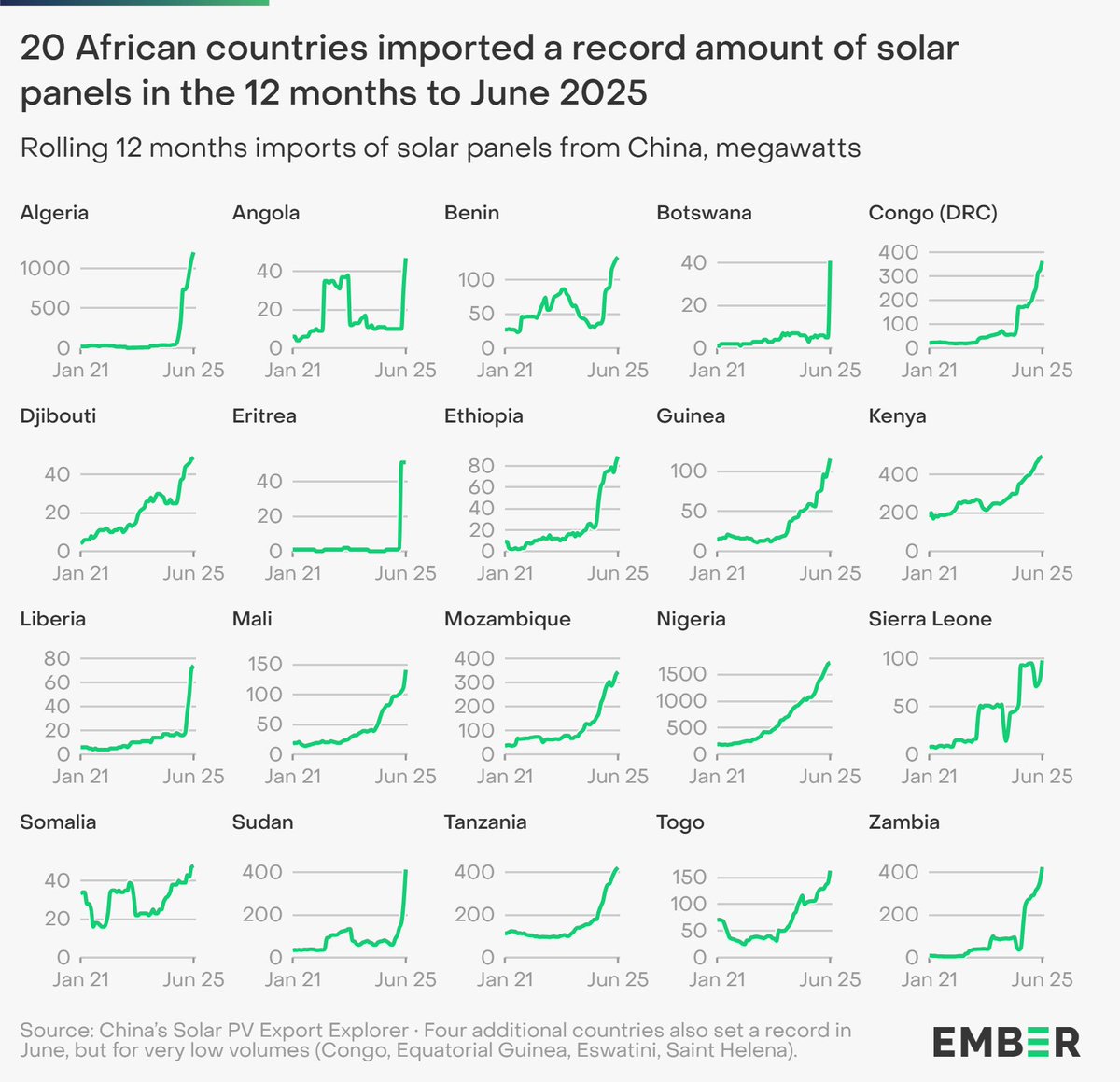
Africa might be the first place where people skip straight from 🔥 fire to 🌞 renewables in just one generation.

♟️ The Energy Meta-Game

History’s plot twists aren’t driven by kings or ideologies they’re in fact driven by energy. Every leap, fire, horse muscle, steam, oil, sunlight rewrites how we live, work, and govern. In Australia, this spans from Dreamtime to Microgrids.:

  • 🔥 Dreamtime Fire: Aboriginal peoples used fire to hunt, shape country, and sustain communities. Control of the flame meant control of life, law, and ceremony.
  • 🐎 Convicts & Horses: The First Fleet relied on muscle, horses, sails, and convict labour to survive. Life revolved around rules, labour, and navigating beaches as borders.
  • ⚙️ Coal & Steam: Time becomes money
  • 🛢️ Holdens & Electricity: Post-war suburbs, cars, and electricity relied on oil and power grids.
  • 🌞 Renewables & Microgrids: Solar panels, wind farms, and microgrids let towns and rooftops generate and trade energy independently.

The rule never changes: find a denser, cleaner, more controllable energy gradient, and build your institutions around it before the next mob does it better.

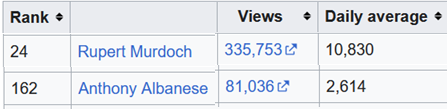
📊 Rupert Murdoch is the 24th-most-read Australian page on Wikipedia; Anthony Albanese is 162nd. That 138-place chasm tells you more about the country than any poll.

🌏 Australia is the only country in the world where a retired 94-year-old media mogul is drawing four times the attention on Wikipedia compared to the person who supposedly runs the government.

  • 📰 Policy is downstream of page-views. When Murdoch’s outlets frame a story, Wikipedia follows, because editors cite the loudest available source. The tail wags the dog.
  • 🤖 Algorithm gravity. Google’s Knowledge Panel for “Australia politics” still surfaces Murdoch’s bio ahead of Albanese’s on mobile. That isn’t neutrality; it’s inherited SEO

If 🚨43,000 folks rock up to March for Australia rally this weekend, 👮‍♂️Victoria Police capacity will be exhausted.

Weekend availability pool
65 % of 14 000 sworn 👮‍♂️Victorian Police officers =
9 100 officers.

Fixed commitments
Routine weekend demand = 6 500
Porepunkah man-hunt for Desi Freeman = 300
Total fixed = 6 800

Remaining officers available for surge duties
⚡9 100 – 6 800 = 2 300 officers

📊Police-to-crowd ratio (double staffing for weekend shift rotations)
2 officers per 37.5 protesters = 2 / 37.5 ≈ 0.0533 officers/protester.

🔢Maximum crowd the 2 300-officer buffer can cover
2 300 ÷ 0.0533 ≈ 43 125 → ≈ 43 000 protesters

Therefore, 43 000 protesters in the Melbourne March for Australia rally would use the entire 2 300-officer buffer, exhausting all remaining police capacity in Victoria.

When the Nanny State Pivoted from Cars to Pouring Concrete: “25 Years On, Hair’s Whiter, But is Anyone Wiser?” 🕰️🤔

MELBOURNE – MAJOR PROJECTS SCORECARD (Transport & Water)

Project Promised Cost / Date Final (or latest) Cost / Date Cost Blow-out Delay Value for Taxpayers Grade Notes (BCR = Benefit Cost Ratio)
CityLink (Stages 1 & 2) $1.8 b / 1999 $2.5 b / 2000 1.4× 1 yr B Concession to Transurban; now seen as positive NPV despite toll hikes.
Western Ring Road (M80) upgrades 2007–2022 $1.9 b / 2012 $3.8 b / 2022 2.0× 3 yrs C Delivered in 5 packages; some sections on time, overall 40 % over.
Regional Rail Link $3.8 b / 2013 $4.3 b / 2016 1.1× 1 yr C Auditor-General: BCR 0.9; patronage 30 % below forecast.
East West Link (cancelled) $6–8 b / 2018 $1.3 b *spent* F $1.3 b spent, zero infrastructure delivered.
Melbourne Metro Tunnel $9 b / 2016 $13.48 b / 2025 1.5× 4 yrs C Auditor-General 2023: revised BCR ~1.2.
West Gate Tunnel $5.5 b / 2022 $10–12 b / 2025 1.8–2.2× 3 yrs C PFAS contamination drove >$3 b blow-out; BCR now <1.0.
Level Crossing Removal (55 sites) $5–6 b / 2022 $8.3 b / 2023 1.4× 1 yr B Program BCR 1.8; delivered 40 % faster per site than historical average.
North East Link $10–15 b / 2027 $26.1 b / 2028 1.7× 1 yr C Business-case BCR 0.7; scope inflation (longer tunnels).
Melbourne Airport Rail $5 b / 2026 $10 b / 2029 (on hold) 2.0× 3 yrs+ F Scope & alignment still changing; not yet contracted.

MELBOURNE – BROAD INFRASTRUCTURE SCORECARD (Buildings)

Project Promised Cost / Finish Final (or latest) Cost / Finish Cost Blow-out Delay Value for Taxpayers Grade Notes (BCR = Benefit Cost Ratio)
Victorian Desalination Plant $3.1 b / 2011 $5.7 b + $18–19 b contract / Dec 2012 6.1× 1 yr F Drought insurance facility; never run at full capacity until 2017; adds $608 m p.a. to water bills even when idle.
Federation Square $135 m / 2000 $450 m / Oct 2002 3.3× 2 yrs B 8 m visitors p.a.; prime civic and cultural asset.
Docklands Redevelopment $7–8 b (1996) $14.6 b / ongoing 1.9× 25 yrs+ D 190 ha renewal; land value uplift >$10 b; criticised for poor public realm.
New Footscray Hospital $1.2 b / 2022 $1.495 b / 2025 1.25× 3 yrs B 504-bed tertiary teaching hospital; first green-star public hospital in Victoria.
Joan Kirner Women’s & Children’s Hospital $200 m / 2021 $220 m / 2023 1.1× 0 yrs A 200-bed women’s & paediatric centre; now state’s 2nd-largest maternity hub.
Australian Institute for Infectious Diseases $300 m / 2025 $400 m / 2026–27 1.3× 1 yr B 10-storey super-lab; pandemic R&D hub next to Melbourne Biomedical Precinct.
Royal Children’s Hospital Redevelopment $1.0 b / 2011 $1.3 b / 2011 1.3× 0 yrs B International award-winning paediatric facility; BCR 2.1 post-opening.
Royal Melbourne Hospital Royal Park $250 m / 2012 $350 m / 2016 1.4× 2 yrs C 200-bed acute tower; emergency dept doubled.
Peter MacCallum Cancer Centre $1.0 b / 2015 $1.2 b / 2016 1.2× 1 yr A Co-located with RMH; integrated oncology hub; BCR 2.4.
Melbourne Convention & Exhibition Centre Stage 2 $205 m / 2018 $235 m / 2018 1.15× 0 yrs B 9 000-seat plenary hall; major events generator.
Melbourne Conservatorium of Music $110 m / 2019 $160 m / 2022 1.45× 2 yrs C University of Melbourne; world-class acoustic halls.
State Library Victoria Vision 2020 $88 m / 2019 $91 m / 2020 1.03× 0 yrs A Heritage-sensitive expansion; 40 % jump in visitation.
Melbourne Arts Precinct Transformation $1.4 b / 2025 $1.8 b / 2025 1.3× 0 yrs B New NGV Contemporary, Arts Centre spire & public realm.
Big Housing Build $5.3 b / 2024 $5.7 b / 2024 1.07× 0 yrs A 12 000 new dwellings; 30 % delivered on budget.